Last updated November 18, 2026
DIY vs Professional ADU: The Spring Valley Homeowner’s Decision Guide
Nevada is an owner-builder state. You can legally pull your own permit and build your own accessory dwelling unit, and the online tutorials make it look like the smart money move. Here’s the catch those videos skip: under Nevada law, if you sell a home you built yourself within 24 months, the state can presume you built it to sell, which strips away your owner-builder liability protection. In Spring Valley, where an unpermitted or owner-built ADU can stall a refinance or trigger a resale disclosure, the legal exposure often outweighs the construction savings. This guide walks through both sides: the real money, the real law, and where DIY actually helps.
Quick Answer
For most Spring Valley homeowners, hiring a professional ADU builder is the safer financial bet, not because DIY labor can’t produce a decent unit, but because Nevada’s owner-builder resale rule, Clark County permit and inspection requirements, and lender rules around unpermitted structures can cost more than the contractor markup. DIY makes sense when you’re limiting yourself to finish work and landscaping on an otherwise professionally built unit; it rarely makes sense for the full build on a property you might sell in the next several years.
Table of Contents
- What Does Nevada’s Owner-Builder Law Actually Say?
- What Does a Spring Valley Homeowner Really Save on a 500 Sq Ft ADU DIY Build?
- Which ADU Tasks Are Genuinely DIY-Friendly?
- Where Do Clark County Inspections Fail Most Often on DIY ADUs?
- Is Prefab the Middle Path Between DIY and Full Build?
- What Happens at Refinance or Sale With an Owner-Built ADU?
- Common Mistakes to Avoid
- When to Call a Professional
What Does Nevada’s Owner-Builder Law Actually Say?
Nevada lets a homeowner act as their own general contractor, pulling permits under an owner-builder exemption instead of a contractor license. That exemption exists so you can build a home or an ADU for your own use, not to produce inventory for the market. The statute is clear on that intent, and so is the consequence when the intent looks otherwise.
The 24-month rule is the piece that catches people. If you occupy your owner-built ADU, then sell the property within two years of finishing the work, the state can presume you built it with the intent to sell. That presumption matters because the owner-builder exemption is what shields you from the liability framework that licensed contractors operate under. Lose the protection and you’re exposed to defect claims from future owners, sometimes years after the sale, sometimes for problems the buyer discovers when they pull a permit for their own remodel.
Here’s the short list of what the statute asks you to be able to prove:
- Occupancy intent at the start: documentation showing you planned to live in the primary home and use the ADU for family, rental income, or workspace, not resale.
- Actual occupancy: utility records, mail, or tax filings that line up with the timeline.
- Proper permitting: the permit was pulled under the owner-builder exemption, not under a contractor’s license that wasn’t involved in the work.
- Clean inspections: every phase signed off by Clark County.
If you do proceed as your own builder, keep a file from day one. Date-stamped photos of each phase, a written statement of intent signed and dated before you file, receipts for materials, and the inspection records themselves. This is the same documentation discipline a professional outfit keeps on every job, and it’s the piece most DIY builders skip. If the legal side alone feels like more risk than you want to carry, ADU builders in Spring Valley can walk through the permit path with you before you commit either way.
What Does a Spring Valley Homeowner Really Save on a 500 Sq Ft ADU DIY Build?
Say you’re building a 500 square foot detached ADU behind your house in Spring Valley. A professionally built unit of that size runs roughly $150,000 to $250,000 in this market, or about $300 to $500 per square foot, depending on finishes, site prep, and whether you go site-built or prefab. The DIY version of the same project sounds like it could land at $90,000 to $130,000 in raw materials. The gap looks like a house payment, until you start subtracting the real costs.
Here’s a realistic line-item view of what the gap actually looks like in Spring Valley:
- Raw materials and framing package: $40,000 to $65,000
- MEP subcontractors (electrical, plumbing, HVAC rough-in and finish): $25,000 to $45,000, and most Spring Valley homeowners still hire these out because Clark County won’t pass an amateur electrical rough-in
- Foundation and slab: $12,000 to $22,000
- Permit fees and plan review (Clark County): $3,000 to $8,000
- Tool rental over an 8-12 month build: $2,500 to $6,000
- Dumpster and disposal, multiple pulls: $1,800 to $3,200
- Redo costs after a failed inspection: often $5,000 to $15,000 per major correction
- Timeline cost: a DIY build takes 12 to 24 months, during which you’re not collecting rent on a unit that could pull $1,400 to $2,200 per month in Spring Valley
Stack that against a contractor’s price and the “savings” lands somewhere between $15,000 and $40,000 on a good year, and closer to zero, or underwater, on a year with two failed inspections and a framing correction. The rent you didn’t collect during the extra year wipes out most of the gap. Our technicians have up to 20 years of experience, and the honest version of this math is that the professional bid is usually not much higher than a competent DIY build, once the timeline and corrections are priced in.
Which ADU Tasks Are Genuinely DIY-Friendly?
Some of an ADU can absolutely be yours. The parts where an amateur’s work will pass inspection and look good for years are the finish side, not the structural or systems side. Here’s the split we’ve watched hold up across Spring Valley projects.
DIY friendly:
- Interior painting and trim work
- Landscaping, hardscape, and the patio surround
- Finish carpentry like closet systems, shelving, and door hardware
- Cabinet installation on factory-built boxes
- Final cleaning and move-in prep
- Fence and gate work, if it’s not a pool barrier
Not DIY friendly:
- Electrical rough-in and panel work, which is the single most common failure point at inspection and the most dangerous piece of the build
- Structural framing and shear wall work, where one improperly nailed or braced wall fails the whole structure check
- Plumbing rough-in and gas lines
- HVAC ducting and load calculations
- Roof tie-in and waterproofing at the ADU’s connection to any existing structure
- Foundation and slab work, especially on Spring Valley’s caliche-heavy soils where the wrong approach cracks within the first summer
A panel with a loose neutral or a load calculation that ignores Las Vegas Valley summer draw isn’t a punch-list item, it’s a fire risk. If you’re going to touch anything on that second list, it should be with a licensed electrician or plumber standing next to you, not a tutorial.
Where Do Clark County Inspections Fail Most Often on DIY ADUs?
Clark County inspectors have seen every shortcut, and the ones that trip up DIY builders in Spring Valley tend to cluster in the same few places. This is our read on the top failure points, based on what we see come back to us as rework.
- Electrical rough-in. Missing nail plates over studs where wiring runs, boxes set too deep or too shallow, no proper grounding, and a panel that doesn’t match the load calculation. Inspectors fail these on sight.
- Structural framing. Shear wall nailing schedules ignored, headers undersized, and hold-downs missing or installed with the wrong fasteners. A frame that looks straight to the eye can fail the structural inspection in ten minutes.
- Setbacks and site plan. The ADU is placed six inches too close to a side or rear property line, or the site plan shows a utility easement the homeowner didn’t check. This one usually means moving the building.
- Egress windows. Bedroom egress window too small or too high off the floor. The size and operation rules are specific, and DIY plans often get them wrong by two inches.
- Insulation and vapor barrier. Missing insulation in one bay, or a barrier installed backwards. In Spring Valley’s climate that means a hot attic and a failed thermal inspection.
- Final life-safety items. Smoke and CO detectors in the wrong rooms, or a missing handrail at the stairs.
Each failure costs a re-inspection fee and, more importantly, a week or two of your timeline. Two or three of these over the course of a build easily eat a month of rent. If you want a process that’s built around not failing those inspections in the first place, that’s exactly what a home addition contractor in Spring Valley is set up to deliver.
Is Prefab the Middle Path Between DIY and Full Build?
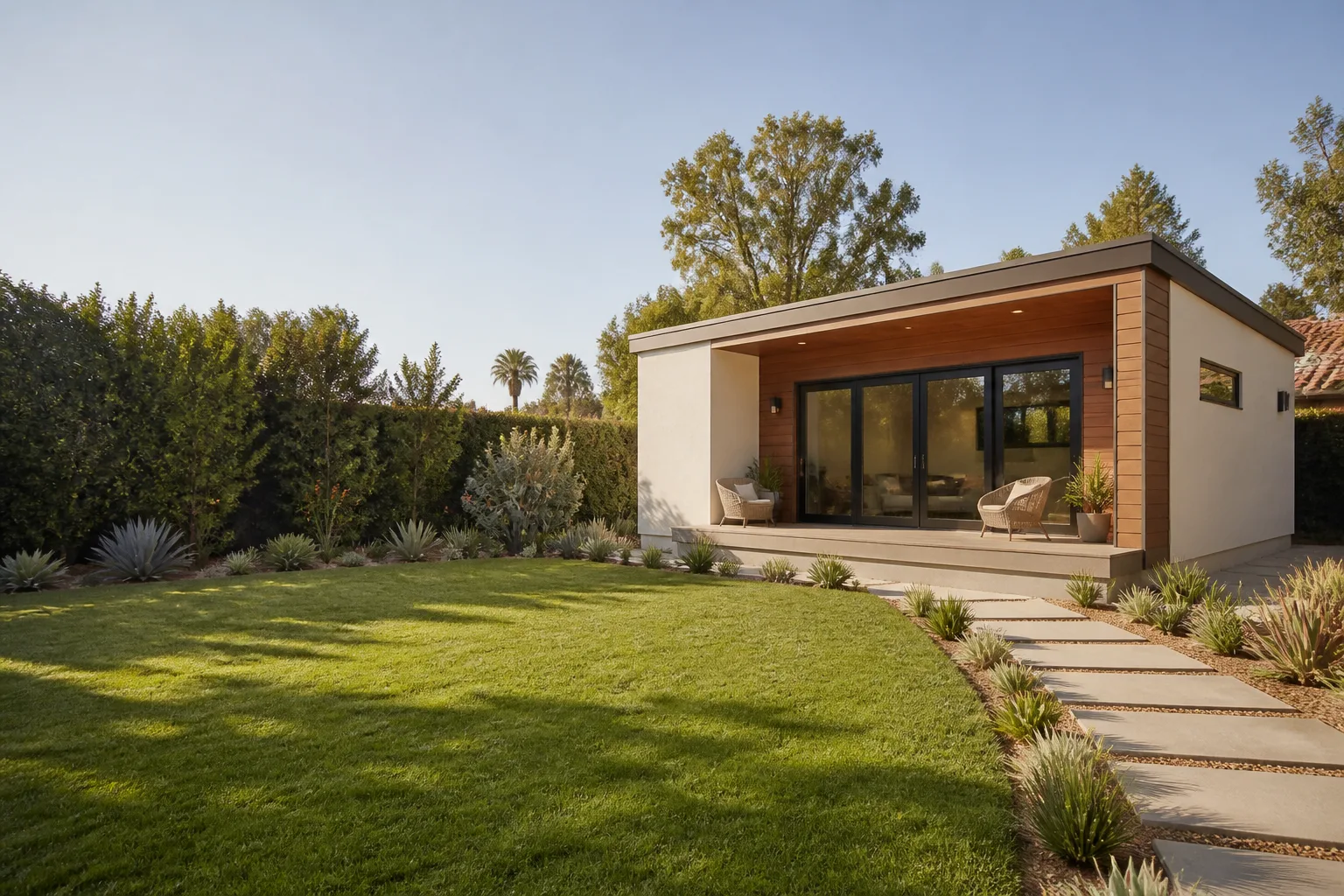
Prefab changes the DIY equation dramatically because it moves the complex fabrication off your site and into a factory, where the electrical, plumbing, and framing are already inspected and documented before the unit ever reaches Spring Valley. That leaves you with site prep and finish work, which are the tasks an ambitious homeowner can actually handle.
Brands like Boxabl ship a nearly finished unit you set on a prepared foundation. Mighty Buildings offers panelized and modular systems that go together faster than stick-built, with factory-controlled tolerances. Plant Prefab works on a similar factory-built frame. The trade-off is that site prep still has to be done right: foundation, utility trenching, and the connection point to your existing sewer and power. Get those wrong and you’ve got a finished box sitting on a bad pad.
Realistically, the hybrid path looks like this:
- Hire out the foundation, utility trenching, and the actual set and utility connection.
- Do the deck, hardscape, and landscaping yourself.
- Handle interior finish of factory-completed units: paint touch-up, trim, and furnishings.
- Let a professional handle the permit filings, since prefab still needs Clark County approval for the siting and utility connections.
That structure captures a chunk of the DIY savings without touching a panel or a gas line. If you’re exploring prefab options, it’s worth talking to a team that already builds with these brands, so the siting and permiting pieces don’t fall to you.
What Happens at Refinance or Sale With an Owner-Built ADU?
This is where the DIY ADU story often turns. A fully permitted, finaled ADU adds value on an appraisal. A partially permitted ADU, or one built without a permit at all, does something different: it can block appraisal-based financing, delay a sale, or force a disclosure on the seller’s side that costs the sale.
Here’s the pattern we see when a lender looks at an owner-built ADU in Spring Valley:
- Appraisal: an unpermitted ADU is usually not counted as livable square footage, so it adds little or nothing to the appraised value.
- Financing: most conventional lenders won’t include an unpermitted structure in the property’s value, and some won’t finance the property at all without it being permitted or demolished.
- Title insurance: a title company may raise exceptions around unpermitted improvements, which can complicate the title chain at closing.
- Disclosure: Nevada requires sellers to disclose known material defects and permit status, and an owner-built ADU without finaled inspections is exactly the kind of item that scares buyers away or triggers a price reduction.
- Insurance: homeowner policies often exclude damage to or liability arising from unpermitted structures.
Any one of those items can cost more than the entire savings on a DIY build. The worst version of this is an ADU that looks great and has a finaled permit for only the shell, with the electrical and plumbing finished after final inspection, because that brings the resale problem right back. The licensed-and-insured path exists partly so the paperwork trail is real when a buyer’s lender asks for it.
Common Mistakes to Avoid
- Filing the owner-builder permit without a written intent file. If you sell within 24 months and can’t show you intended to occupy, you’re fighting the state’s presumption with no evidence. Set the file up before you file the permit, not after.
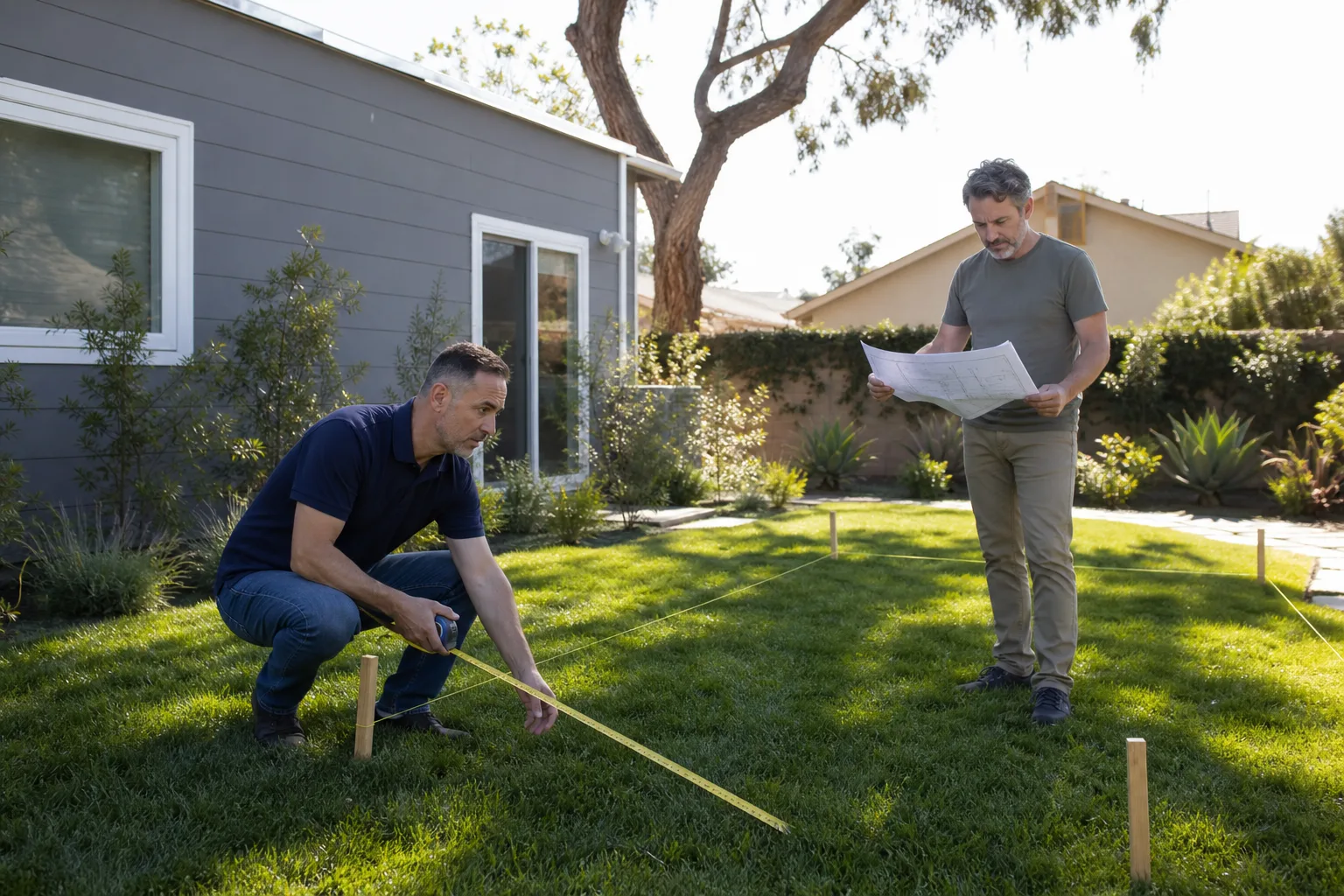
- Skipping the lot survey. In Spring Valley’s tighter subdivisions, an ADU footprint has to hit exact setbacks, easements, and height limits. Building first and surveying second means paying to move the building.
- Underestimating how much of the “DIY money” is really MEP subcontractors. Most DIYers end up hiring an electrician and plumber anyway, so the actual savings is smaller than their budget spreadsheet suggested.
- Buying a prefab unit before checking the site prep costs. The box is the cheap part; the foundation, utilities, and connection work can match or exceed it.
- Letting a permit sit open too long. Clark County permits expire, and letting one lapse starts the review over. This is a common DIY timeline casualty.
- Assuming the finish work is trivial. A DIY paint job that looks fine on a wall can fail on cabinetry and trim if the surface prep was rushed. The last 10% of an ADU takes 30% of the time.
- Not asking who’s carrying the liability. If a subcontractor you hired has a problem and you’re the owner-builder, the claim lands on you, not them, in most cases.
When to Call a Professional
Call a professional when the ADU will touch electrical, plumbing, structural framing, or gas. Call when the unit has to be permitted, finaled, and defensible to a future buyer’s lender. Call when you plan to sell within a few years and the owner-builder rules would put you on the wrong side of a defect claim. Call when your timeline matters because the rent income is part of the plan. A room addition contractor in Spring Valley isn’t the right fit for every build, but on any unit that has to survive a refinance, an inspection, and a sale, the professional path usually costs less than the DIY path when you price the risk honestly. Benson ADU Builders Spring Valley offers free estimates in Spring Valley, a written price before any work starts, and a 365-Day Done Right Promise on every project. Call (833) 734-5583 to schedule one.
Frequently Asked Questions
Yes. Nevada is an owner-builder state, so you can pull your own permit as long as you intend to occupy the property and not sell it within 24 months of finishing the work. The permit has to be filed under the owner-builder exemption, and Clark County still requires every inspection to pass. If you plan to sell sooner, the owner-builder liability protection may not apply. Call (833) 734-5583 for a free estimate if you want to compare the numbers before you commit.
On a 500 square foot build, actual net savings usually land between $15,000 and $40,000, and can drop to zero after failed inspections, tool rental, and a longer timeline. The rent you’re not collecting during a 12 to 24 month DIY build eats most of the gap. Call (833) 734-5583 for a written price from a professional and compare line by line.
Under Nevada law, the state can presume you built the ADU with the intent to sell, which strips away the owner-builder liability protection and leaves you exposed to defect claims from future owners. The safe path is either to stay in the home past 24 months or to have documented intent from day one. If the timeline is tight, comparing professional bids first is the safer move. Call (833) 734-5583 for a free estimate.
Most conventional lenders won’t count an unpermitted ADU toward the property’s value, and some won’t finance the property at all without the unit being permitted or removed. A finaled permit is what makes the ADU count. If you’re not sure how your ADU will appraise, that’s a conversation to have before you build, not after. Call (833) 734-5583 for a free estimate on a permitted build.
Yes, in a specific way: prefab moves the framing, electrical, and plumbing into a factory where they’re already built and inspected, which leaves you with site prep and finish work. Foundation, utility trenching, and connection work still need to be done right and still need Clark County approval, so a hybrid approach with a professional handling the site and permits is the realistic version. Call (833) 734-5583 to talk through prefab options with a team that builds with Mighty Buildings, Boxabl, Plant Prefab, and Tuff Shed.
Painting and trim, landscaping and hardscape, finish carpentry, cabinet installation, and final cleanup are the work we regularly see homeowners handle without risk on a professionally built unit. Anything in electrical, plumbing, framing, or gas should stay with a licensed trade. That division is how you get real savings without the legal and inspection exposure. Call (833) 734-5583 to map out a hybrid scope on your free estimate.
The Bottom Line
The DIY vs professional ADU decision in Spring Valley isn’t really about whether you can build it. It’s about whether you can defend it, to Clark County inspectors, to a future buyer’s lender, and to a state law that presumes intent to sell if you move too fast. On a 500 square foot unit, the raw-money gap between DIY and professional is smaller than most budgets show, especially once permit delays, tool rental, correction costs, and lost rent are counted. If you’re building for the long haul and you’re genuinely skilled at the trades, the owner-builder path with careful documentation can work. For most Spring Valley homeowners, a written price, a permitted build, and a 365-Day Done Right Promise is the cheaper path in the end. Start at Benson ADU Builders Spring Valley home and compare the numbers before you buy a single board.
Call (833) 734-5583 for a free estimate. Your written price comes before any work starts, and a live person answers the phone any hour of the day or night.
Written by the team at Benson ADU Builders Spring Valley.