Last updated November 18, 2026
How to Hire an ADU Contractor in Spring Valley: A Step-by-Step Guide
Nevada requires a contractor license endorsement for any project over $1,000, but “licensed contractor” on a business card can mean a handyman license legally capped at minor residential repairs, not the B-2 or trade licenses an actual ADU demands. That gap is where Spring Valley homeowners lose real money. A crew that builds a permitted accessory dwelling unit and a crew that patches drywall can both call themselves licensed. This guide shows you how to tell them apart in about five minutes using the Nevada State Contractors Board lookup, plus the five contract clauses and bid line items that decide whether your Spring Valley ADU project stays on budget or ends with a lien on your house.
Quick Answer
To hire an ADU contractor in Spring Valley, verify the contractor’s Nevada State Contractors Board license number and confirm the license class covers new residential construction and ADU scope, then get a written, line-item bid with permits and utility fees spelled out before signing. Never sign until the contract includes a scope of work, payment schedule, lien waiver language, change-order terms, and a warranty. Take the extra hour on license verification – it’s the single step that protects you from the most expensive hiring mistake in the Las Vegas Valley.
Table of Contents
- Why the License Class Matters More Than the Design
- How to Run the Nevada State Contractors Board License Lookup
- The Five Contract Clauses That Must Be in Writing Before Ground Breaks
- How to Read an ADU Bid Apples-to-Apples
- Red Flags Specific to the Las Vegas Contractor Market
- Interview Questions That Reveal Real ADU Experience
- Permits and Inspections in Unincorporated Clark County
- Prefab vs. Site-Built: How It Changes Your Hiring Checklist
Why the License Class Matters More Than the Design
In Nevada, a contractor license is not one thing. The Nevada State Contractors Board issues licenses by classification, and each classification limits what a contractor can legally build. A Class B-2 license covers residential and small commercial construction – the category that includes new homes and detached ADUs. A general engineering or general building license covers different scope. A handyman or “minor repairs” classification is capped far below an ADU.
Here’s why this matters in Spring Valley specifically. The housing stock around the 89147 and 89148 ZIP codes includes a lot of mid-2000s single-family homes with large backyards – exactly the lots where ADUs pencil out. That has drawn a wave of contractors into the market, and not all of them carry the right classification for a new detached unit that requires footings, framing, electrical, plumbing, and a certificate of occupancy. When a contractor builds beyond their license scope, the consequences land on the homeowner: unpermitted work, failed inspections, insurance that won’t cover the job, and in the worst case a mechanic’s lien filed against your property by a subcontractor the builder never paid.
Ask directly: “What is your license classification, and does it cover new detached residential construction?” A qualified ADU builder answers instantly and hands you the number. A contractor who hesitates, pivots to “we’ve been doing this for years,” or tells you the license is “in the works” is telling you what you need to know.
If you want to see what a properly licensed ADU build looks like from start to finish, our ADU Builders in Spring Valley page walks through the process.
How to Run the Nevada State Contractors Board License Lookup
The Nevada State Contractors Board maintains a free public license search, and running it takes about five minutes. Here’s the step-by-step:
- Get the license number in writing. Ask for it by text or email, not verbally. Every legitimate contractor has a number and gives it without friction.
- Search the number on the Nevada State Contractors Board website. The lookup returns the license holder’s legal name, classification, status, expiration date, and any disciplinary history.
- Confirm the status reads “active.” An expired or suspended license is a hard stop. Walk away.
- Confirm the classification matches ADU scope. For a detached residential unit, you want a residential classification that covers new construction. If the classification is limited to repairs or a specific trade, the contractor cannot legally build your ADU end to end.
- Check the legal business name against the bid. The name on the license should match the name on your contract and the name on the insurance certificate. Mismatches are a warning sign.
- Review any disciplinary actions. The board posts citations and complaints. One old complaint isn’t disqualifying; a pattern is.
- Confirm active insurance and bonding. The listing shows the contractor’s current general liability insurance and workers’ compensation status. Ask for a certificate of insurance naming you as an additional insured on the project.
What a valid ADU-scope license record looks like: active status, a residential classification tied to new construction, a legal entity name that matches your contract, current insurance, and no unresolved disciplinary actions. If any of those five items is off, that’s your answer.
The Five Contract Clauses That Must Be in Writing Before Ground Breaks
A verbal estimate and a handshake are not a contract, and in Nevada the paperwork is what protects you. These five clauses need to be in writing before a single shovel turns:
- 1. Detailed scope of work. Every element of the build – foundation, framing, roofing, electrical, plumbing, HVAC, finishes, landscaping repair – named in the contract. “Standard ADU build” is not a scope. If it isn’t written, it isn’t included, and you’ll pay for it later as a change order.
- 2. Payment schedule tied to milestones. Never a large deposit upfront. A fair schedule follows completed, inspected work: a modest mobilization payment, then draws tied to foundation, framing, rough-in, and final inspection. Nevada limits deposits, so know the cap before you sign.
- 3. Lien waiver language. This is the clause homeowners forget, and it’s the one that saves your house. Your contract should require the general contractor to provide conditional lien waivers from every subcontractor and supplier at each payment, and an unconditional final lien waiver at completion. Without it, a sub the builder stiffed can file a lien against your property even though you paid in full.
- 4. Change-order terms. Any change to scope must be in a written change order signed by both parties before the work happens, with the price stated. This is how you stop scope creep from being billed after the fact.
- 5. Warranty and completion terms. The contract should state the workmanship warranty, what it covers, how long, and the process for a callback. Put the start and substantial-completion dates in writing too, with weather allowances defined.
If a contractor won’t put these five in writing, that’s not a contractor you want building a structure on your property. Written pricing before work starts is a baseline, not a bonus, and it’s part of how we run every project at Benson ADU Builders Spring Valley.
How to Read an ADU Bid Apples-to-Apples
Low bids are low for a reason, and the reason is usually omission. When you compare three ADU bids in Spring Valley, the cheapest one is almost always missing the same items. Here’s what to line up side by side:
- Clark County permit fees. Building, electrical, plumbing, and mechanical permits plus plan review fees are real costs. A bid that lists permits as “TBD” or excludes them is quoting you a lower number than you’ll pay.
- Utility connection fees. Sewer, water, and power connections for a new unit often run into the thousands. Some bids bury these in a vague “site work” line; better to see them itemized.
- Grading and site prep. Spring Valley lots vary in slope and drainage. Grading, excavation, and haul-off are frequently omitted from the headline number.
- Landscape and hardscape repair. Trenching for utilities and moving equipment tears up yards. Restoration should be a line item, not a surprise.
- Final finishes and allowances. Fixtures, flooring, countertops, and appliances are often quoted as “allowances” – a placeholder dollar figure the homeowner tops up later. Ask for the allowance amount and what happens if you go over.
- Fire sprinklers, if required. Depending on the unit and lot, sprinkler scope can appear in one bid and vanish from another.
The right way to compare bids: put them in a spreadsheet, one row per scope item, one column per contractor. Every cell should have a dollar figure or the word “excluded.” Then the true cost of each bid is visible. An apples-to-apples comparison usually shows the low bid isn’t low at all once the omissions are added back.
Red Flags Specific to the Las Vegas Contractor Market
Some warning signs are universal. These are the ones that turn up again and again in the Las Vegas Valley ADU market:
- Unusually fast timelines in summer. If a bid promises a finished ADU in a fraction of the normal build time, ask what’s being skipped. In our experience, compressed summer timelines in Spring Valley usually mean permits pulled as an afterthought or inspections sidestepped.
- Vague “allowance” pricing on fixtures. A $3,000 allowance for a kitchen that realistically costs $12,000 is a bid that’s $9,000 light. Allowances are the most common way a low bid becomes a high final invoice.
- “We’ll handle the permit later.” ADU permits in unincorporated Clark County require plan review, and the process takes time. A contractor who treats permits as a formality has either never pulled one or is planning to build unpermitted.
- Cash-only payment demands and large upfront deposits. Both are ways to leave a homeowner with no paper trail and no leverage.
- No physical business address or verifiable references. Ask for two recent ADU clients in the Valley you can call. A real builder has them.
- Pressure to sign today. No legitimate ADU project hinges on a same-day signature. Artificial urgency is a sales tactic, not a construction schedule.
A contractor with a strong local reputation will happily slow down, put the price in writing, and let you verify everything. If the answer to “can I have a day to review this?” is anything other than “of course,” keep looking.
Interview Questions That Reveal Real ADU Experience
The interview is where you separate ADU specialists from general contractors who think an ADU is just a small house. These questions surface whether the contractor has actually built them in this market:
- “How many ADUs have you built in unincorporated Clark County in the last two years?” Not houses – ADUs, in this jurisdiction. The answer tells you whether they know the process or are learning it on your dime.
- “Walk me through the plan review process for an ADU here.” A real ADU builder describes submittal, plan review comments, corrections, and the sequence of inspections without pausing.
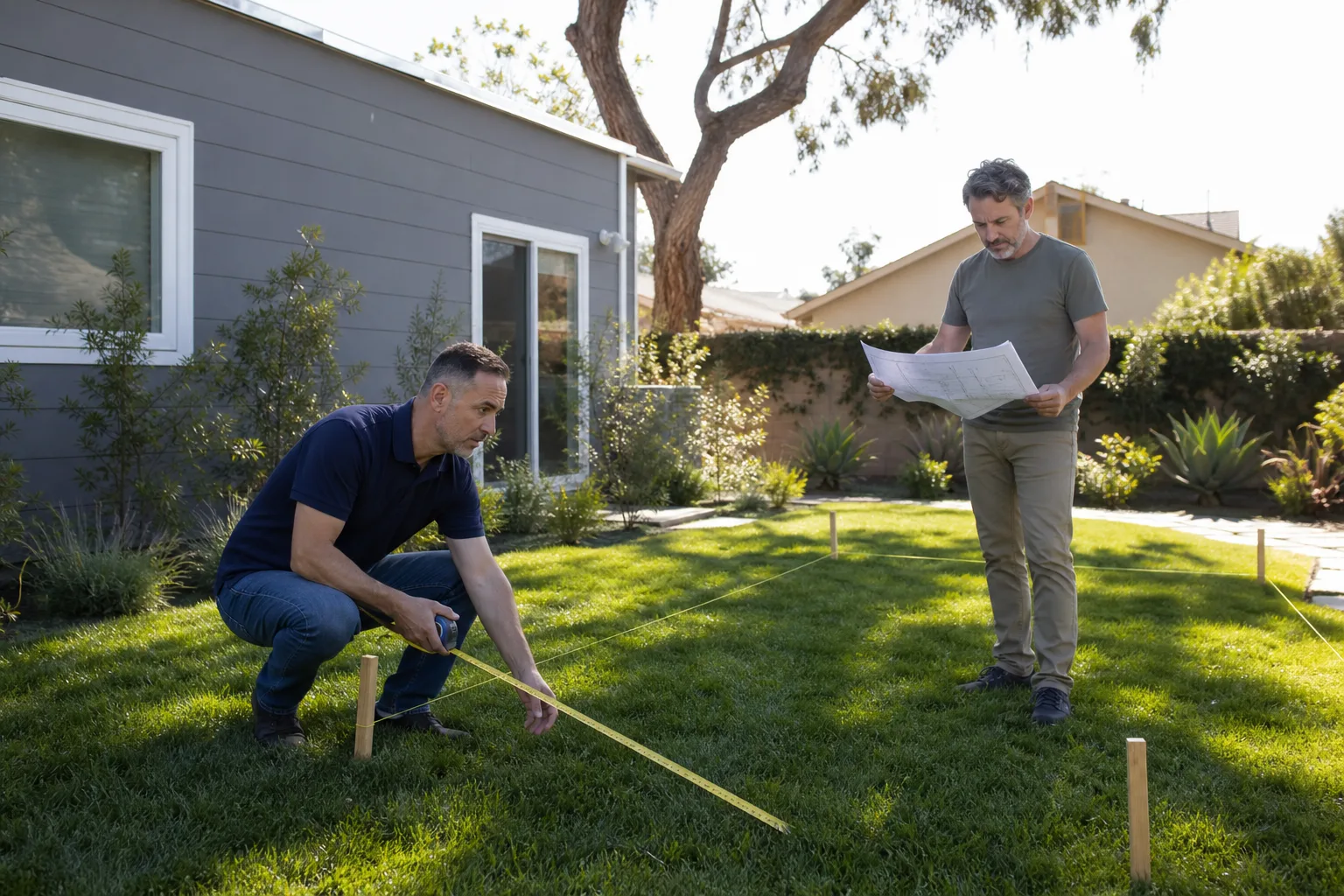
- “What setback and lot coverage rules apply to my lot?” Setbacks are the required distance between a structure and the property line. An experienced builder asks for your parcel number and gives you a specific answer, not a general one.
- “How do you handle the utility connection – separate meter or tied to the main house?” This is a real decision with cost implications, and it depends on the utility and the unit.
- “Have you built with prefab panels before? Which brands?” Prefab ADUs from brands like Abodu or Plant Prefab arrive as panels or modules and assemble differently than site-built. A builder who has done it knows the crane logistics, foundation tolerances, and utility stubs required.
- “What’s your warranty, and what happens if something fails after close?” The answer should be specific and in writing.
- “Can I see a written price for my project before I commit to anything?” The right answer is yes, and it should be detailed.
Whether you’re building a full Home Addition Contractor in Spring Valley project or a smaller Room Addition Contractor in Spring Valley scope, these questions apply. The license and paperwork discipline is the same.
Permits and Inspections in Unincorporated Clark County
Much of Spring Valley sits in unincorporated Clark County, which means ADU permits go through Clark County’s building department rather than a city. That has real implications for your hiring decision: your contractor needs experience with the county’s plan review process, not just a neighboring city’s. The sequence runs plan submittal, plan review and corrections, permit issuance, then a series of inspections that typically include foundation, framing, rough electrical and plumbing, insulation, and final. You receive a certificate of occupancy when every inspection passes.
The verification step homeowners skip: before the contractor breaks ground, ask for the permit number and pull the public record yourself. Your name should be on the permit as the property owner, the contractor’s license number should be listed, and the scope should match what you agreed to. A permit pulled for the wrong scope or under a different contractor’s license is a problem you want to find before framing, not after.
We’ve seen Spring Valley projects stall because the builder quoted a permit timeline that assumed a city process and didn’t account for county review. Ask your contractor how long county plan review has actually taken on their recent projects, and get the number in writing in the schedule.
Prefab vs. Site-Built: How It Changes Your Hiring Checklist
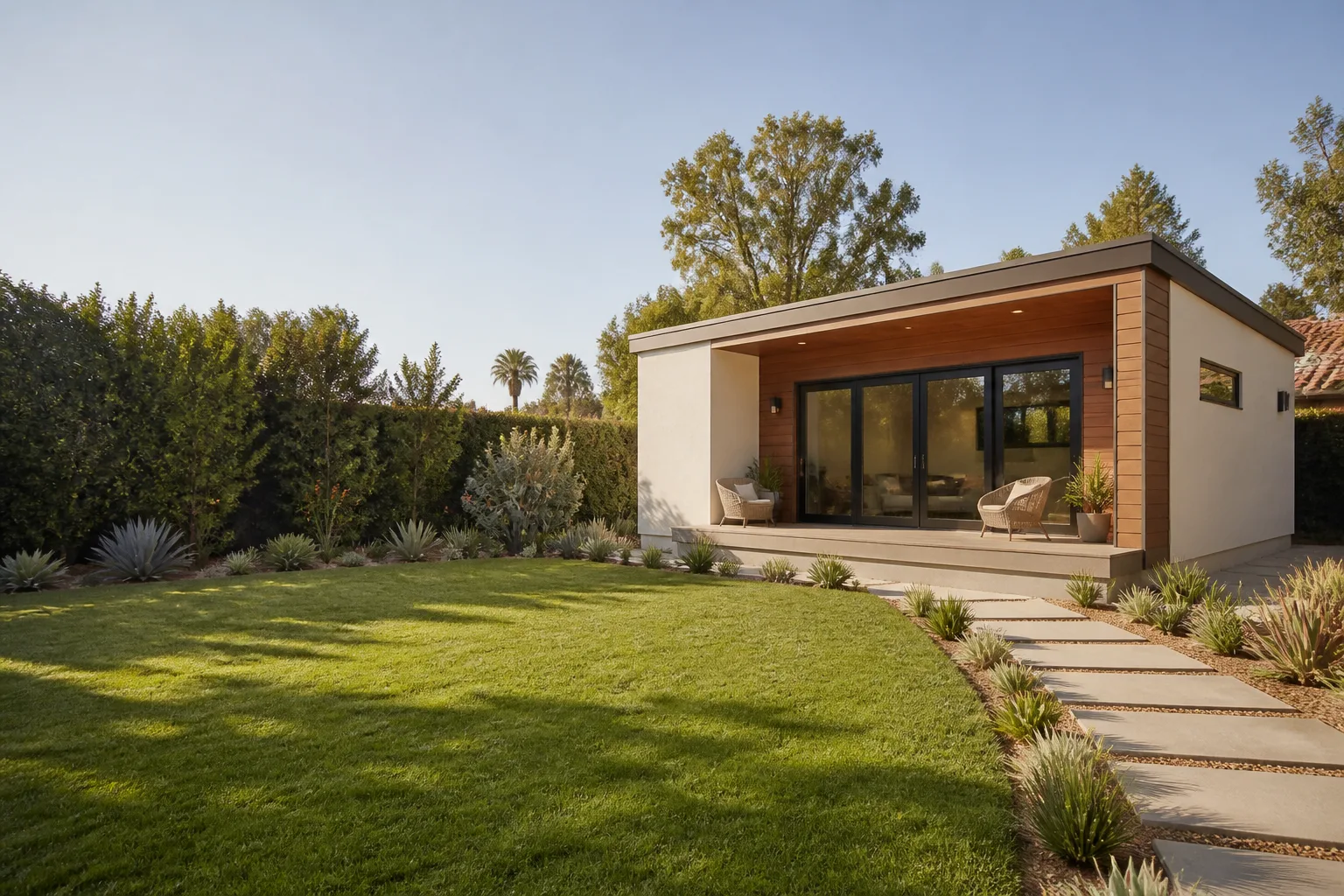
An ADU in Spring Valley can go up two ways. A site-built unit is framed and finished on your lot by a crew. A prefab ADU is manufactured in panels or modules – brands like Abodu, Plant Prefab, and Tuff Shed build to that model – then assembled on-site. Prefab units often shorten the on-site construction window, which matters in a climate where summer heat can push crews to start early and knock off before the worst of the afternoon. But prefab changes what you verify about the contractor.
For a prefab build, ask whether the contractor is authorized to build with that brand, because factory warranty and engineering specs usually require it. Ask about crane and delivery logistics, foundation tolerances, and how utility stubs are placed before the panels arrive. Ask who handles the permit – the factory or the on-site builder. And ask whether cladding and finish materials are included, since brands like James Hardie cladding can arrive as an upgrade rather than standard. A contractor who has run prefab projects answers these smoothly; one who hasn’t will improvise, and improvisation on a prefab site is expensive.
Benson ADU Builders Spring Valley is authorized to build with several leading prefab brands, including Abodu, Plant Prefab, Tuff Shed, and James Hardie materials. That means we can price both paths side by side and give you a written comparison. You can see the full range on our Benson ADU Builders Spring Valley home page.
Common Mistakes to Avoid
- Hiring on license class alone without checking scope. A handyman license is a legal license; it just isn’t one that covers ADU construction. Confirm the classification, not just that a license exists.
- Signing before the lien waiver language is in the contract. Skipping this clause is how a paid-in-full homeowner ends up with a subcontractor’s lien on their property in Clark County.
- Comparing bids by the bottom-line number. The lowest number is usually the one with the most omitted line items. Compare scope item by scope item.
- Accepting a verbal price. A verbal estimate that shifts after work starts is the complaint we hear most. A written price before work begins is non-negotiable.
- Not verifying the permit. Pull the public record and confirm the permit is in your name, under the contractor’s license number, for the correct scope.
- Choosing a contractor with no ADU track record in unincorporated Clark County. Experience in a neighboring city’s permit process doesn’t transfer cleanly to county plan review.
- Treating a summer timeline as a selling point. In Spring Valley, an aggressive summer schedule usually means the contractor is planning to cut corners somewhere.
When to Call a Professional
If you’re building a detached ADU, a garage conversion, or a home addition over $1,000, you need a licensed contractor – full stop. The license requirement, the permit process, the structural and utility work, and the lien exposure are all reasons a homeowner shouldn’t attempt an ADU as a DIY project. Call a professional when you’re ready to compare written bids, when you want a prefab option priced against a site-built one, or when you’ve received a bid and need to know whether it’s complete. Benson ADU Builders Spring Valley offers free estimates in Spring Valley – call (833) 734-5583 to schedule yours. Every estimate includes a written price before any work starts, and every project carries the 365-Day Done Right Promise.
Frequently Asked Questions

A detached ADU in Spring Valley typically ranges from roughly $120,000 to $300,000 depending on size, prefab versus site-built, and finish level. A garage conversion or JADU (junior accessory dwelling unit) runs lower, often in the $60,000 to $120,000 range. The only number that matters is your written, line-item bid – call (833) 734-5583 for a free estimate with the price in writing.
Search the contractor’s license number on the Nevada State Contractors Board public lookup and confirm three things: the status is active, the classification covers new residential ADU construction, and the legal name matches your contract. Ask for the number in writing first, then verify it yourself. If the classification is limited to repairs or a single trade, that contractor cannot legally build your ADU end to end.
Yes. An ADU in unincorporated Clark County requires building permits, plan review, and inspections through the county building department. Building without them risks fines, forced removal of the unit, and problems at resale. Before work starts, confirm the permit number and verify it’s listed under the contractor’s license with your name as property owner.
It shouldn’t. A written price before work begins, with change orders only for work you approve in writing, is the standard you should demand. Scope creep billed after the fact is what happens when a bid is vague. Ask for a line-item bid – including permits, utility fees, and grading – so the number you sign is the number you pay.
A site-built ADU typically takes several months from signed contract to certificate of occupancy, and a prefab unit can shorten the on-site timeline. The county plan review phase adds time and varies by project. Ask your contractor how long county review has actually taken on recent projects, and get the schedule in writing with weather allowances defined.
A prefab ADU is manufactured in panels or modules by a brand and assembled on-site; a site-built ADU is framed and finished at your property. Prefab can shorten on-site construction and offer fixed product specs, while site-built offers more customization. If you go prefab, confirm your contractor is authorized to build with that brand, or the factory warranty may not apply.
The Bottom Line
The single step that protects your money on a Spring Valley ADU project is verifying the Nevada State Contractors Board license class covers new residential ADU construction, not just that a license exists. Do that, then insist on five contract clauses in writing – scope, milestone payments, lien waivers, change orders, and warranty – and compare bids line item by line item rather than by the bottom number. Watch for the local red flags: cash demands, vague allowances, and summer timelines that don’t add up. The extra hour of verification is the cheapest insurance you’ll ever buy on a six-figure build, and a written price before work starts should always be the floor, never the finish line.
Call Benson ADU Builders Spring Valley at (833) 734-5583 for a free estimate. You’ll get a written price before any work starts, a live person on the phone, and the 365-Day Done Right Promise on every project – all backed by The Relay Visibility Guarantee.
Written by the team at Benson ADU Builders Spring Valley.