Last updated November 18, 2026
How Long Does ADU Builders Take? Timelines and What to Expect
Most contractors will tell you an ADU takes three to four months to build. That number is real, but it’s only the second half of the story. The honest clock for a Spring Valley ADU, from the day you sign the contract to the day the certificate of occupancy is in your hand, runs closer to 7 to 11 months. The missing time lives in design, Clark County permitting, utility coordination, and site prep, which together can absorb 8 to 14 weeks before a single wall goes up. This guide maps the entire clock, phase by phase, including the inspection hold points where Spring Valley projects most often lose weeks, so you can plan against a realistic schedule instead of a marketing one.
Quick Answer
A typical ADU in Spring Valley takes 7 to 11 months from signed contract to certificate of occupancy. Roughly 2 to 4 months of that is permitting and site prep before construction, and 3 to 5 months is the build itself. Prefab models from brands like Plant Prefab or Boxabl shorten the build phase but add factory lead time, so the net difference is smaller than most timelines suggest.
Table of Contents
- The full ADU timeline, phase by phase
- Why Clark County permitting eats 8 to 14 weeks
- Prefab vs. site-built: where the time actually goes
- The three inspection hold points that stall projects
- What week-by-week tracking looks like
- Red flags in a contractor’s quoted timeline
- Site prep and utility coordination
- ADU cost ranges in Spring Valley
The Full ADU Timeline, Phase by Phase
When we sit down with a Spring Valley homeowner, we break the schedule into nine phases. Each has a realistic range, and each depends on the one before it. Here’s the clock most timelines leave out.
- Design and engineering (3 to 6 weeks). Site survey, floor plan, structural drawings, Title 24 energy docs. This is where you decide whether you’re building a detached ADU or a JADU (a junior ADU, typically carved from existing square footage).
- Clark County permitting (8 to 14 weeks). Plan check, resubmittals, and permit issuance. The single biggest variable in the whole schedule.
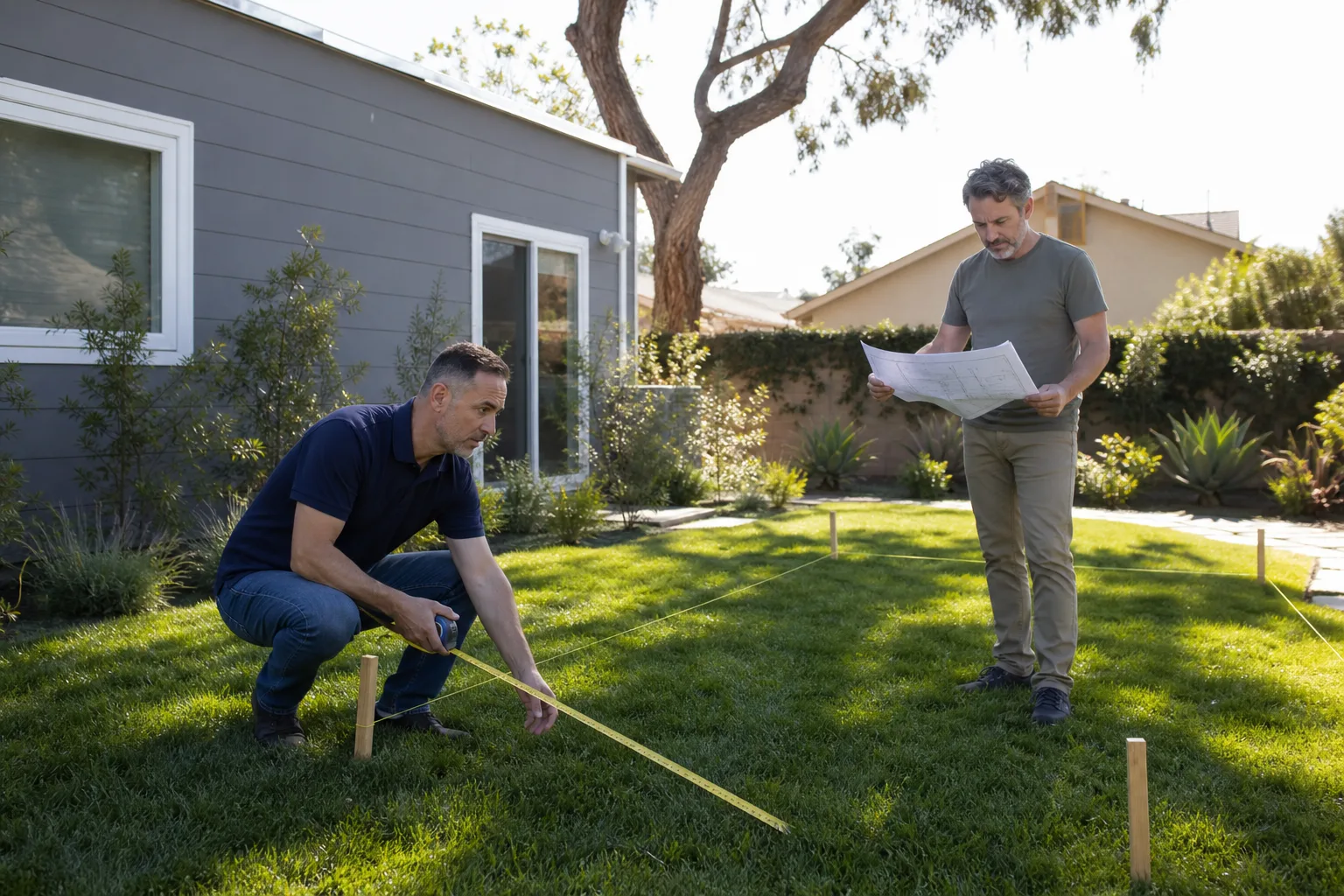
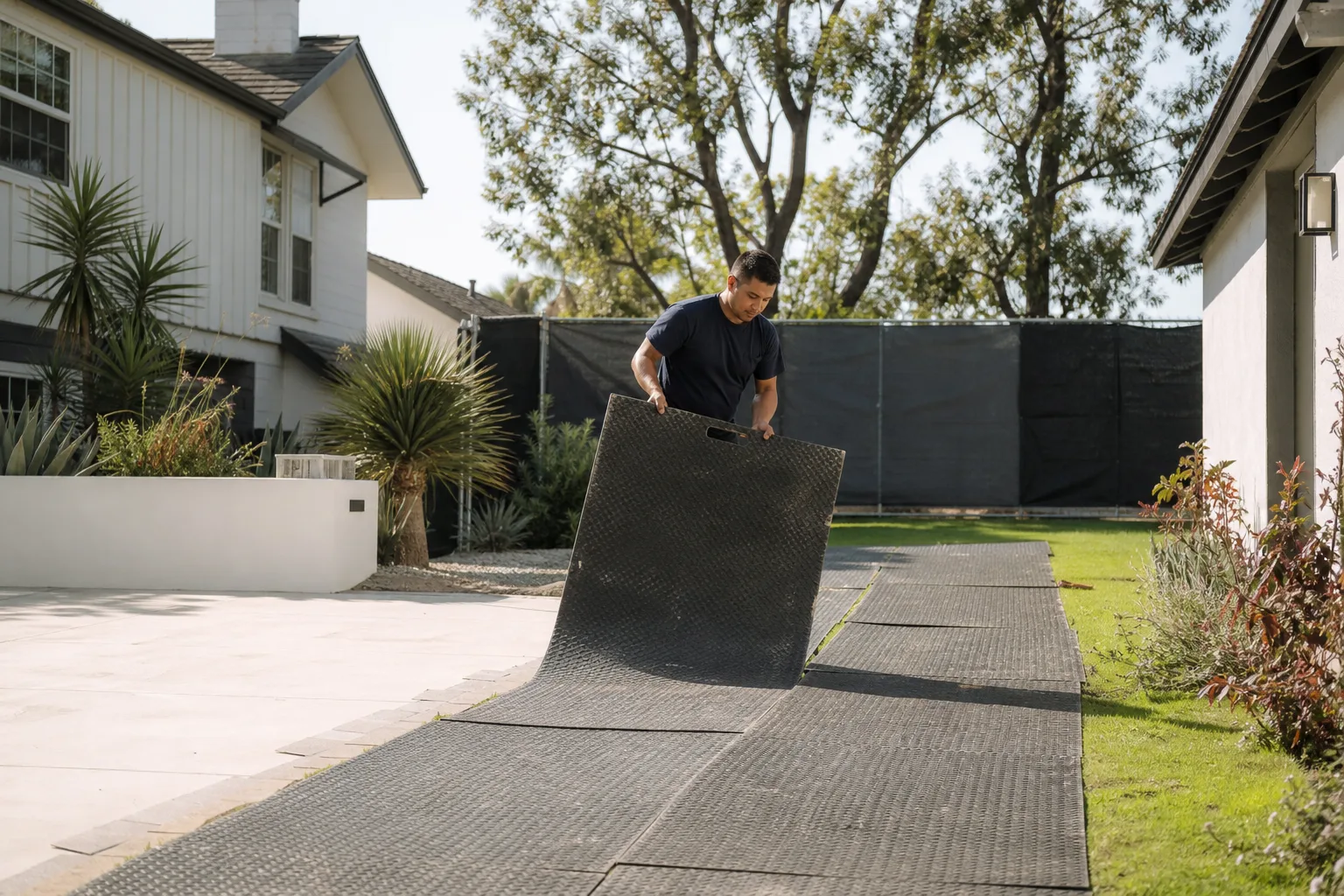
- Site prep and utility coordination (2 to 4 weeks). Clearing, grading, trenching for water, sewer, and power, plus coordinating with the local utility for the meter.
- Foundation (2 to 3 weeks). Excavation, forms, pour, cure. Curing alone takes several days you can’t compress.
- Framing and delivery (2 to 4 weeks site-built, 1 to 2 days prefab set). Where site-built and prefab diverge hardest.
- MEP rough-in (2 to 3 weeks). Mechanical, electrical, and plumbing run through open walls before insulation.
- Rough inspections (1 to 2 weeks). The first major hold point.
- Insulation, drywall, finishes (4 to 6 weeks). Cabinets, counters, flooring, paint, fixtures.
- Final inspections and certificate of occupancy (1 to 3 weeks). The finish line, if the prior phases were clean.
Total it honestly and you land between 7 and 11 months. The range narrows once your plans are approved. For a deeper look at what we build in the area, see our ADU Builders in Spring Valley page.
Why Clark County Permitting Eats 8 to 14 Weeks
Permitting is the phase homeowners underplan for most. In Spring Valley, all ADU permits route through Clark County’s building department, and the clock starts only once your plans are complete and submittable. A clean submittal with a full structural and energy package moves faster than one that gets kicked back.
Here’s what drives the range:
- Plan check queue. The county reviews in order, so a busy season adds weeks regardless of your project.
- Resubmittals. Each correction round restarts the clock. One missing setback dimension or a fire separation detail can cost two to three weeks.
- Setback review. A setback is the required distance from your ADU to the property line. Spring Valley lots vary, and tight lots need a variance that adds time.
- HOA or CC&R review, if your subdivision requires it before county submittal.
We submit the most complete package possible the first time and track the review online, so a correction request triggers an immediate fix instead of sitting in an inbox. If you’re also considering a larger structure, our Home Addition Contractor in Spring Valley page covers how that permitting track differs.
Prefab vs. Site-Built: Where the Time Actually Goes
Prefab marketing makes it sound like an ADU appears in a weekend. The reality is more nuanced, and it matters when you’re planning around a rental start date or a family move-in.
A prefab ADU from a brand like Plant Prefab is built in a factory as panels or modules, delivered, and set on your foundation. That collapses the framing and rough-in phases that eat 4 to 6 weeks on a site-built job. But you’re trading that for factory lead time, which typically runs several weeks to a few months depending on the brand and model. A Boxabl unit is delivered as a folded module and unfolded on site, which sounds instant but still requires foundation, utility hookups, and county inspection.
The net effect: prefab often saves you 3 to 6 weeks overall versus site-built, not the months the brochures imply. Where prefab genuinely wins is predictability. The build happens indoors on a factory line, so weather and crew scheduling can’t stretch it. In our experience, the projects that finish closest to their quoted date are the ones where the homeowner understood this trade-off up front. We build with and source from the leading prefab brands, so we can walk you through the real lead times for each.
The Three Inspection Hold Points That Stall Projects
Inspections are where a clean schedule goes sideways. In Spring Valley, three hold points account for most of the 2 to 6 week delays we see. Scheduling around them is the difference between a tight job and a slow one.
- Foundation inspection before the pour. The county inspects rebar, forms, and anchor placement before concrete goes in. If the inspector can’t get out promptly or finds a detail off, the pour waits. Concrete can’t be un-poured, so this one is unforgiving.
- MEP rough-in inspection, before insulation and drywall. Electrical, plumbing, and mechanical all get checked with walls open. A single missed grounding detail means opening a wall you just closed. We schedule this inspection the day rough-in wraps so the walls can be insulated the next morning.
- Final inspection before the certificate of occupancy. Everything has to be finished, including the utility meter release. If the power meter isn’t set, the final fails even if the work is perfect. Coordinating the utility early prevents this.
None of these are avoidable. What’s avoidable is a schedule that doesn’t build in the inspection windows, and a contractor who only calls for an inspection after the crew is already standing around. Call (833) 734-5583 for a free estimate and we’ll map these hold points onto your specific lot.
What Week-by-Week Tracking Should Look Like
Transparency during a long build is what separates a good experience from an anxious one. When a project is tracked properly, you always know what happened this week and what’s coming next. Here’s what we track and the questions you should ask at each milestone.
- Weeks 1 to 4 (design): What’s the status of my drawings and structural package? When do we submit?
- Permit phase: Has the county picked up my file? Any correction comments yet?
- Site prep: Is the utility trench dug and the meter ordered? Photos of the cleared lot.
- Foundation: Inspection scheduled? Photos of forms and rebar before the pour.
- Framing and delivery: Delivery date confirmed? Set complete with photos?
- Rough-in and inspections: Rough-in inspection passed? Insulation going in?
- Finishes: Progress photos of cabinets, counters, paint, and fixtures.
- Final: Final inspection scheduled? Meter released? Certificate of occupancy issued?
Our Relay Visibility Guarantee puts the price in writing before work starts and gives you real-time tracking, so you’re never calling to ask “what’s happening this week?” A live person answers the phone around the clock.
Red Flags in a Contractor’s Quoted Timeline
A quoted timeline should reflect your calendar, not a contractor’s convenience. Watch for these:
- “Three months, start to finish.” That number ignores permitting entirely. In Spring Valley, no county permit clears that fast.
- No written schedule. If the timeline is verbal, it will slip. Ask for a phase-by-phase schedule in writing.
- Vague permit responsibility. If they don’t say who pulls the permit and handles resubmittals, assume you’re doing it.
- No contingency in the plan. A schedule with zero slack for inspection windows is padded for their sales pitch, not your planning.
- Prefab promises that skip lead time. Anyone who quotes a prefab ADU without mentioning factory delivery time is either new to it or glossing over it.
- “We’ll figure out inspections when we get there.” The hold points above are predictable. A pro plans around them before demo day.
Site Prep and Utility Coordination
Site prep is the quiet phase that decides how smoothly everything after it goes. On a Spring Valley lot, that means clearing and grading, confirming the foundation footprint sits within setbacks, and trenching for water, sewer, and electrical. Each utility has its own coordination: the sewer lateral connection, the water line tie-in, and the electrical meter, which the local utility has to release before power flows. We start the meter request during permitting so it doesn’t become a bottleneck at final inspection. If your ADU is a smaller room addition rather than a full unit, our Room Addition Contractor in Spring Valley page covers that path, and our main Benson ADU Builders Spring Valley home page ties the whole service together.
ADU Cost Ranges in Spring Valley
Timeline and budget move together, so a ballpark helps you plan. These are general ranges; your final written price depends on size, site, and whether you go prefab or site-built.
- Detached ADU (600 to 1,000 sq ft): roughly $180,000 to $350,000 depending on finishes and site work.
- Attached or garage-conversion ADU: roughly $120,000 to $220,000.
- JADU (junior ADU): often the lowest entry point, since it reuses existing structure.
- Permit and impact fees: a real line item, and worth confirming early.
- Utility connections: varies by lot and distance to existing lines.
Every project with us comes with a written price before any work starts, and the 365-Day Done Right Promise backs the finished build. Call (833) 734-5583 for an exact number on your lot, with estimates free.
Common Mistakes to Avoid
- Planning around the build phase only. If you anchor a rental start date to a three-month build, you’ll miss it by months. Plan from signed contract to certificate of occupancy.
- Submitting an incomplete permit package. In Clark County, each correction round restarts the review clock. Complete plans the first time.
- Ordering the utility meter too late. A finished ADU with no meter fails final inspection. Start the meter request during permitting.
- Ignoring HOA or CC&R review. Many Spring Valley subdivisions require approval before county submittal, a step that adds weeks if missed.
- Choosing prefab purely on speed. Factory lead time is real. Prefab wins on predictability, not necessarily on total calendar time.
- Accepting a verbal timeline. A schedule you can’t see is a schedule you can’t hold anyone to. Get it in writing.
- Forgetting the setback check early. A tight lot can force a variance. Confirm setbacks before you fall in love with a floor plan.
When to Call a Professional
Some of the ADU timeline you can influence yourself: gathering HOA rules, confirming your lot’s setbacks, deciding between a detached ADU and a JADU. The rest, from plan submittal to the final inspection, is where a pro keeps the clock honest. If your plans keep getting corrections from the county, if your lot has utility or setback complications, or if you’re weighing prefab against site-built and can’t tell which schedule is real, a professional estimate will save you weeks and thousands. Benson ADU Builders Spring Valley offers free estimates in Spring Valley. Call (833) 734-5583 to schedule yours.
Frequently Asked Questions
In most of Nevada, including Spring Valley, expect 7 to 11 months from signed contract to certificate of occupancy. About 2 to 4 months is permitting and site prep, and 3 to 5 months is construction. The build phase alone is the number most contractors quote, but it’s not the full clock.
Usually by a few weeks, not months. Prefab from a brand like Plant Prefab or Boxabl shortens framing and rough-in but adds factory lead time and delivery scheduling, so the net savings is typically 3 to 6 weeks. The bigger prefab advantage is predictability, since the build happens indoors. Call (833) 734-5583 for an exact timeline on a specific model.
Plan check queues, correction rounds, and setback review all add time, and any resubmittal restarts the clock. A complete first submission moves fastest. Call us for help assembling a submittable package before you file.
The foundation inspection before the pour, then the MEP rough-in inspection before drywall. Both are unforgiving because work can’t proceed till they pass, so a missed detail or a late inspection slot costs real days. We schedule them the moment the prior phase wraps.
Not with us. Every homeowner gets a written price before any work starts, so there’s no surprise at the door and no scope creep billed after the fact. The 365-Day Done Right Promise backs the finished work. Call (833) 734-5583 for your written estimate.
Yes. We pull the permit, handle county resubmittals, and start the utility meter request during permitting so it doesn’t bottleneck the final inspection. That coordination is part of why our projects finish close to their quoted date.
The Bottom Line
The number that matters isn’t the build phase, it’s the whole clock. Plan on 7 to 11 months in Spring Valley, with permitting and site prep eating up to 4 of them. Prefab shortens the build but adds lead time, so don’t bank on months of savings. The inspections that stall jobs are predictable, and a contractor who schedules around them protects your date. Get everything in writing: the schedule, the inspection plan, and the price before work starts. If you want a timeline built around your Clark County lot rather than a brochure, call (833) 734-5583 to schedule your free estimate.
Written by the team at Benson ADU Builders Spring Valley.